 admin
admin Ever noticed your cat drinking from the tap or your dog sniffing at a stagnant bowl and walking away? That’s not fussiness. It’s instinct. In the wild, moving water is safer water, and our pets carry that wiring with them, even in the comfiest of homes.
Hydration matters more than most owners realise. Water supports kidney function, digestion, temperature control and joint health. Yet plenty of cats and dogs simply don’t drink enough, and dehydration can creep in quietly before you spot the signs. That’s exactly why so many owners are swapping the humble bowl for a pet drinking fountain. Flowing water is more appealing, stays fresher for longer, and encourages pets to top up throughout the day.
And when it comes to materials, stainless steel pet fountains have quietly become the smart choice. They’re hygienic, tough as old boots, and easy to maintain. In this guide, we’ll walk you through everything you need to know before you buy, from how they work to how to clean them, so you can pick a fountain your furry friend will actually use.
What Are Stainless Steel Pet Fountains?
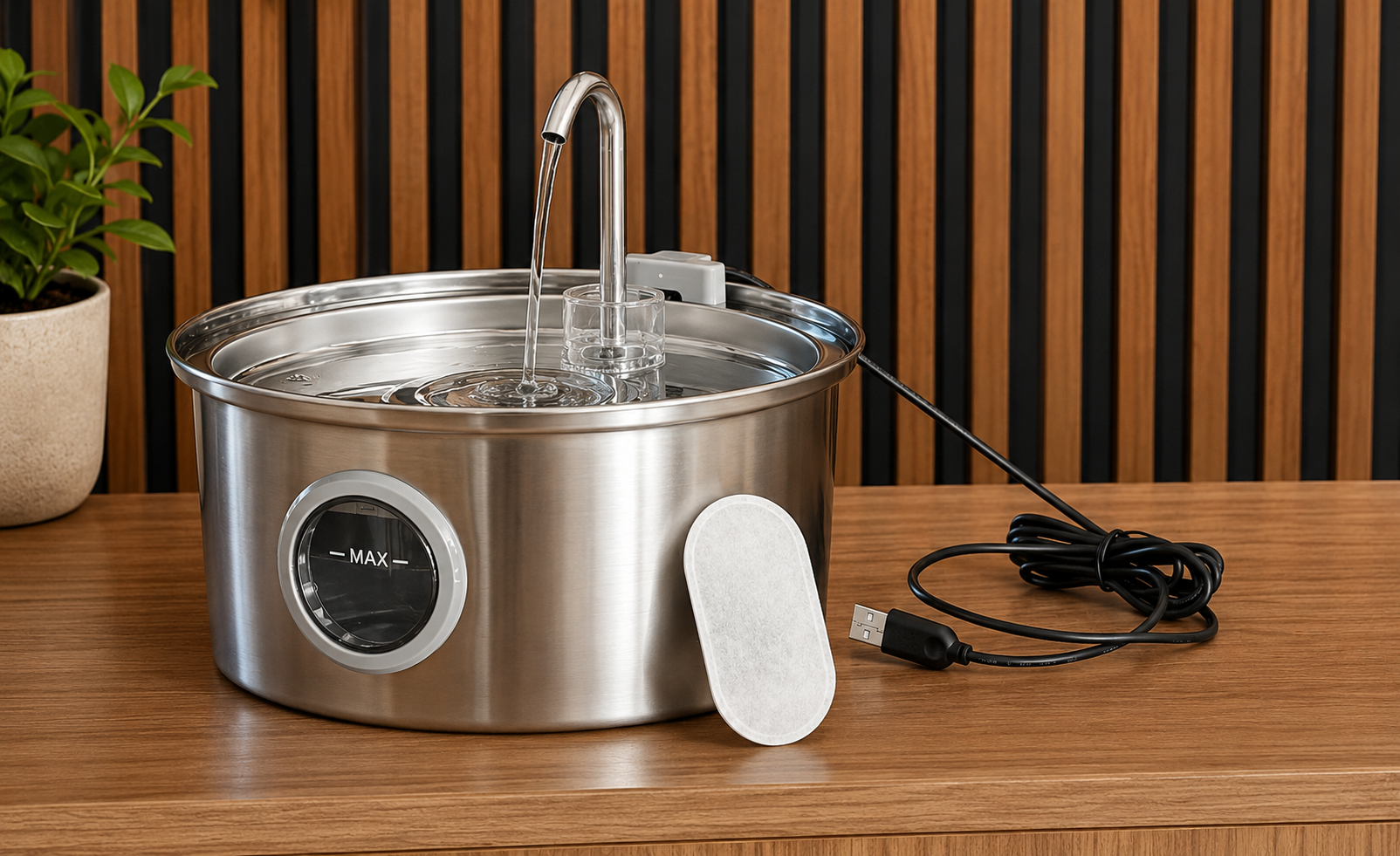
At their core, these fountains are clever little devices that keep water moving so it stays fresh and inviting. A quiet electric pump circulates water continuously, pushing it up through a spout, over a ramp, or into a bubbling stream. That constant movement stops water going stale and keeps it oxygenated, which pets tend to prefer.
Most models include a built-in filtration system too. As water circulates, it passes through a filter that traps hair, food debris, dust and other bits, while helping to reduce impurities and odours. The result? Cleaner, tastier water without you lifting a finger between refills.
The best part is that they suit both cats and dogs. Whether you’ve got a picky feline who insists on running taps or a big, thirsty Labrador, there’s a design and capacity to match.
So how do they beat a traditional bowl? A standard bowl of water sits still all day. It collects dust, warms up, grows bacteria and quickly loses its appeal. A fountain keeps things moving, filtered and fresh, which makes drinking far more tempting for your pet.
Why Choose Stainless Steel Over Plastic?
Plastic fountains are everywhere, and they’re usually cheaper. But once you understand the differences, stainless steel starts to look like the wiser long-term buy. Here’s why.
Better Hygiene
Stainless steel has a non-porous surface, which is a big deal for hygiene. Plastic can develop tiny scratches and micro-abrasions over time, and those little grooves become cosy hiding spots for bacteria and biofilm, that slimy layer you sometimes feel on plastic bowls.
Stainless steel doesn’t play host in the same way. It’s far less likely to retain bacteria, and its smooth surface wipes clean in seconds. If your pet has ever suffered from feline acne (that stubborn chin rash), you’ll know vets often point the finger at bacteria-laden plastic. Switching materials can make a genuine difference.
Durability
Let’s be honest, pets aren’t gentle. Claws, teeth and enthusiastic drinking sessions take their toll. Stainless steel is scratch-resistant and stands up to daily use without cracking, staining or warping.
While a plastic fountain might need replacing after a year or two, a quality stainless steel model can last for many years. That longer lifespan means better value and less waste, which is a win for your wallet and the planet.
Improved Taste
Water picks up flavours from whatever it sits in. Plastic can leave a faint taste or odour that sensitive pets notice straight away, and some will refuse to drink because of it. Stainless steel is neutral, so water tastes clean and fresh.
Pair that with the fountain’s circulating flow, and you’ve got water that’s genuinely appealing. Fresh, moving, flavour-free water encourages pets to drink more often, which is the whole point.
Reduced Odours
Ever caught a whiff of a slightly musty plastic bowl? That lingering smell comes from bacteria and absorbed odours settling into the material. Because stainless steel doesn’t absorb smells, it stays fresher between cleans. Your pet gets odour-free water, and your kitchen corner stays pleasant too.
Benefits of Using a Pet Drinking Fountain
Beyond the material itself, a pet drinking fountain brings a whole list of everyday perks. Here’s what you can expect.
Encourages hydration. Moving water is naturally more tempting, so pets tend to drink more. That’s especially helpful for cats, who are notoriously low-key about their water intake.
Fresh, circulating water. No more stale, dusty bowls. The pump keeps water in motion all day, so it stays clean and oxygenated.
Filtered water. Built-in filters trap debris and reduce impurities, giving your pet cleaner water with every sip.
Supports urinary health. Better hydration helps flush the urinary system, which can lower the risk of urinary tract issues and crystals, a common worry for cat owners in particular.
Reduces dehydration. With appealing water always on tap, pets are less likely to fall short on fluids, especially during warm weather.
Convenient for busy households. A larger reservoir means you’re not refilling every few hours. Nip out for the day knowing your pet has fresh water waiting.
Great for multiple pets. One fountain can happily serve several cats and dogs, keeping everyone hydrated without a queue of bowls cluttering the floor.
Features to Look for Before Buying
Not all fountains are created equal. Keep these features in mind to find the right fit for your home and your pet.
Capacity. Match the size to your household. A small fountain (around 1 to 1.5 litres) suits a single cat or small dog. Larger dogs or multi-pet homes need more, ideally 2 litres or up. If you’ve got several pets or a big, thirsty breed, size up so you’re not constantly refilling.
Filtration system. Look at how the water is cleaned. Activated carbon filters absorb odours and impurities and improve taste. Foam filters catch hair and larger debris. The best fountains use multi-stage filtration, combining both for cleaner water and a longer-lasting pump.
Noise level. A noisy pump can spook nervous pets and drive you round the bend. Choose a model with a quiet pump, ideally one designed to run near-silently, so your pet feels relaxed drinking and you barely notice it’s there.
Ease of cleaning. This one’s crucial. Seek out fountains with dishwasher-safe parts and easily removable components. Smooth stainless steel surfaces rinse clean in moments, which makes regular maintenance far less of a chore.
Pump quality. The pump is the heart of the fountain. A good one is energy-efficient (they run 24/7, after all), built to last, and easy to source replacements for. Check that spare pumps and filters are readily available before you commit.
Water flow settings. Pets have preferences. Some love a bubbling fountain effect, others prefer a gentle stream or a calm free-fall. Adjustable flow settings let you experiment and find what tempts your particular pet to drink.
How to Clean Stainless Steel Pet Fountains
Even the best fountain needs regular cleaning to stay fresh and safe. The good news? Stainless steel makes the job quick and painless. Here’s a simple step-by-step routine.
- Empty the water. Unplug the fountain and pour out any remaining water.
- Remove the filter. Take out the filter and set it aside. If it’s due for replacement, bin it now.
- Wash all removable parts. Rinse and scrub the bowl, spout, ramp and any detachable pieces with warm soapy water. Dishwasher-safe parts can go straight in.
- Clean the pump. This is the bit people forget. Disassemble the pump and use a small brush (an old toothbrush works a treat) to clear away slime and debris from the impeller and crevices. A clogged pump runs poorly and gets noisy.
- Replace the filter regularly. Pop in a fresh filter if needed. Most filters need changing every two to four weeks, depending on how many pets use the fountain.
- Refill with fresh water. Reassemble everything, fill it up with clean water, and plug it back in.
As a rule of thumb, do a quick rinse and refill every two to three days, and a full deep clean (pump included) once a week. Stick to this and your fountain will keep serving up fresh water for years.
Common Mistakes to Avoid
A few easy slip-ups can undo all the benefits of a great fountain. Steer clear of these.
Neglecting the pump. Skipping the pump during cleaning is the number one mistake. Gunk builds up inside, the flow weakens, and the noise creeps up. Clean it every week without fail.
Forgetting to replace filters. An old filter stops working and can actually harbour the very bacteria you’re trying to avoid. Set a reminder and swap filters on schedule.
Buying the wrong size. Too small and you’ll be refilling constantly; too large for a single pet and the water may sit longer than it should. Match capacity to your household.
Placing it near food. Cats especially dislike drinking right beside their dinner, an instinct that keeps water clean in the wild. Position the fountain away from the food bowl to encourage more drinking.
Letting the water run low. Pumps aren’t designed to run dry. A low water level can burn out the motor and leaves your pet short of water. Keep it topped up.
Are Stainless Steel Pet Fountains Worth It?
So, is the extra spend justified? For most owners, absolutely.
Yes, they usually cost more upfront than a basic plastic model. But look at the bigger picture. You get superior hygiene thanks to that non-porous surface, impressive durability that outlasts plastic several times over, cleaner-tasting water your pet actually wants to drink, and easy maintenance that saves you hassle week after week.
When you factor in the longer lifespan and the health benefits of a properly hydrated pet, the value stacks up nicely. Fewer replacements, fewer vet worries about urinary issues, and a happier, healthier companion. That’s a solid return on a modest investment.
The Bottom Line
Good hydration is one of the simplest ways to protect your pet’s long-term health, and a fountain makes it effortless. Fresh, flowing, filtered water keeps cats and dogs drinking happily throughout the day.
Choose stainless steel and you’ll enjoy better hygiene, real durability, cleaner-tasting water and none of those lingering plastic odours. When you’re shopping, prioritise the right capacity, a strong filtration system, a quiet pump, easy-clean parts and adjustable flow settings.
And remember, even the best fountain needs a little love. Regular cleaning and timely filter changes keep everything running beautifully. Get those basics right, and stainless steel pet fountains reward you with years of fresh water and a well-hydrated, happy pet. Your furry friend deserves nothing less, so why settle for a stale old bowl?